An AI Interviewer 🧑🏻💻: How We Built an Autonomous Interviewer from 0 → 1 That Reduced Time-to-Hire & Cost by Up-to 70%
A Little Context: This is the story of how we built a product from 0 → 1 — an AI interviewer that screens candidates and generates detailed analysis reports along with recommendations on who’s actually worth interviewing. This reduced time-to-hire by 70%, saved team's effort, and reduced biasness in hiring.
My Role:
Lead researcher & designer
Scope
MVP: End to end platform, 0 to 1 Product Building
Team
1 developer
1 PM. CEO, CTO
1 designer (me)
Note
🔒 This case study is shared while respecting confidentiality agreement. I’ve ensured to keep it engaging while protecting sensitive information. I’ve structured it in chapters outlining the product development journey in brief. Most images are blurry to hide the confidential data
During the interview, I'm going to present the case study in a cinematic way that reveals behind the scenes, what decisions and why they were taken and so on
Quick demo walkthrough of the platform
Chapter 0
Why Did We Decide to Build This
During our initial phase at Antler building OT.Coach (an HR conversational tool), market research revealed a crowded space of generic HR chatbots. Rather than competing in a low-moat segment, we surveyed over 20 mid-sized HRTech customers and analyzed recruitment sub-categories to isolate where AI workflows create defensible, high-impact value.

The Problem Identified
While resume screening saves 20–30% of administrative time, the biggest operational bottleneck in recruitment lies in initial candidate screening interviews. Recruiter bandwidth limits early-round human evaluations, leading to prolonged time-to-fill and missed talent.
Key Opportunity Identified


Chapter 1
The recruitment industry, lifecycle and market gap
Together with the PM, I conducted generative research to understand:
-
The recruitment industry,
-
Recruitment workflows,
-
Competitor landscape,
-
Gaps in the market (especially in the GenAI era).

TROJAN HORSE METHOD OF RESEARCHING B2B PLATFORMS
We went in as prospects to understand our competitors' products - the value, the pricing, customer and user journey and the features


Chapter 2
Research Phase 2 – Interviewing HR Leaders, CHROs, Recruitment Managers From Staffing & Recruitment Firms


Interviews to learn and gain clarity on how enterprises are utilizing AI in HR Ops
I conducted interviews with CHROS, HR Leaders, Talent Leaders, Recruitment Heads to learn how various organizations in different industries from Fintech to Media
Interviews with Recruitment & staffing agency heads to learn about their process
Chapter 3
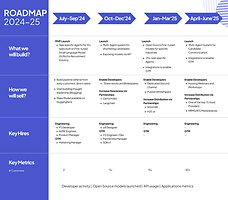
Product Planning, Roadmap, MVP, and GTM Strategy
The entire team worked together to define: Focus areas, MVP scope, Tech stack (frontend, backend), GTM strategy, Roadmap



Chapter 4
Technical Research, ATS Integration: APIs & Webhooks


Too early for this phase
This part covers my research on ATS API integration — why we struggled to achieve our goal that we had early on, and whether we were simply too early in our approach.
We lacked:
-
Mutual Usefulness
-
Robust API Infrastructure
-
Authentication Standards
-
Data Privacy
Chapter 5
B2B Partnership Talks, Early Demos and Pilot acquisition
We began showcasing our product to companies like ANSR, engaging in partnership/acquisition conversations. The product was only partially functional — we demoed the rest via Figma prototypes. The feedback was positive and gave prospective partners clarity on our vision.


Chapter 6: Milestone
Successfully Achieving The “Value Loop”
We built a functioning product (UI was terrible, but that wasn’t the point). What mattered was delivering value:
-
The AI could autonomously interview candidates,
-
Assess their suitability based on the JD, resume, and interview responses,
-
Generate reports recommending whether they should proceed to the next round.

Chapter 7
Bugs & Breakdown – Technical, Challenges, Prioritization Problem, Evaluating Voice Agent Models
We faced major technical issues:
-
Voice agent would randomly stop asking questions,
-
Mic picked up background noise,
-
The website hanging & freezing,
-
Screen and video recordings failing.
This led us to evaluate other voice AI models like Vapi, Retell, Eleven Labs and move away from Deepgram. Significant amount was spent here but were not able to achieve our goal of attaining natural and seamless conversation between the candidate & the AI.
We solved some of these by tweaking the UX, e.g., dynamically adjusting mic sensitivity in real time. This phase taught me that building AI products is 80% technical problem-solving. UX was important but secondary at this point.


Chapter 8: Milestone
Screening 80+ Candidates, Real-world Testing, Admin side Design improvements
We screened over 100 candidates across multiple roles for internal hiring. We recorded all interviews and monitored sessions via LogRocket for both technical and behavioral analysis. This was new territory for them. The large-scale testing gave us clear technical and UX problem areas to prioritize.


Feedback & Support System for candidates
Our platform was still encountering some issues during the real world testing and we made a way to make sure that candidates can address their issues and could retake the screening interview.
Added a link to the form inside the interviewer screen for easy access

Product Level UX Improvements & Impacts
1
Complexity level: 1/5
Bulk Resume Screening and interview schedule

Early version – We could only schedule the interview one at a time. Where scheduling for mass candidates would be a tedious process.
Metrics
Time to schedule interview for 1 candidate: 5 secs
Say for 30 seconds: 150 secs = 2 mins 30 secs

Improvement – Bulk selecting candidates and scheduling the interview
Metrics
-
Time to schedule interview for 1 candidate or 100 candidates remains the same:
-
Reduced the steps from 2 steps to 1 step
2
Complexity level: 2/5
Interviewer Module – Layout changes & support system

Early version – The layout of the interview was 70:30.
Left: caption, right actions and video of candidate
Problems:
-
It took more cognitive effort for the candidate to read the question asked by the AI which impacted both hiring user as well as candidate
-
Also, it made It difficult for the user of the hiring team to see if the candidate was cheating by looking elsewhere.

Improvement – The interface layout was made sure to meet the problems of both the users - candidate and the hiring admin
Trade off
Taking other proctoring measures to combat malpractices required greater effort and there were technical challenges which other aspects of the application were affecting, hence enlarging the video can help track the candidate’s eye moments and body language.
Plus sharing of screen was also there to prevent switching of tabs, it did work up to an extent
Complexity level: 2/5
Support System – Ensuring Our company maintains its good reputation


The importance of support system
We knew that, the interviewer module was not at it’s 100% functional and knew it going to freeze, lag-out and breakdown. We were expecting that. Hence, we wanted to add a link to the form where the candidates could submit the issues they face during the interview, via Google form. The we could reschedule the interview
The copy “Facing issues? Let us know here”, I made it short and prominent on the top right while occupying less space in the overall screen real estate not to cramp it with others
3
Complexity level: 4/5
Dynamic Mute and Unmute states to ensure seamless and natural conversation to bypass technical challenges
Problems
Crashing
Freezing
Glitching
Our interviewer module was facing a lot of technical problems wrt the voice agent STT model we were using
-
It used to pickup slightest of the background noise thinking it was a candidate’s response which was leading to the it’s getting frozen during the interview
-
Even after processing the response, it used to take lot of time to respond back and majority of the times, it used to abruptly halt the further process
-
Whenever the candidate interrupted during the AI’s response, the application used to break down and was not able to continue and move forward
One very easy fix…
Manual Submit
To have the candidate manually submit the answer after speaking using a keyboard key or mouse click. Which would take less time to develop and would erase almost all the technical challenges. Some of our competitors were doing this
But, at the same time
Aim for the best experience
Our aim was to create a seamless conversation system between the candidate and the AI really close to human like natural conversation to set us apart from other competitors in the market. More development time could have been spent on making it better tweaking the voice agent model, testing others and integrating them
Prioritizing
We had already spent good amount of time tweaking the STT model & evaluating other voice models. It was not working how it was supposed to. So, It was up to us to come up with a better solution which would take less time to develop
We needed a system behavior change that could take less effort and time and deliver a better solution.

What worked
How about we dynamically mute and unmute candidates based on the situation?
When the AI speaks, the candidate is muted and when its candidate’s turn the mic is unmuted.
After a certain period of silence is detected the answer gets submitted
Edge case: When the candidate is silent for longer period of time and is thinking, the countdown submission starts where the candidate when starts to speak / click the button it resets the countdown of answer submission


Impact
Average interview time went from 3 mins to 12 mins & 8/10 were successfully completed without disruption and any issues
No manual interaction (handsfree)
Reduced technical problems and glitches
Reduced workload on the support system
Outcome & retrospective
-
Helped us, we hired a candidate for our internal role where we interviewed 100+ candidates. Saved us time
-
Couldn’t take it to market and generate revenue due to time, technical and prioritization problems
-
Learnt lessons along the way of building this product– Project management, Product & GTM Strategy, planning, timing, relationships with customers
Current status: It's up for acquisition